
Reconstruction
Microsurgical Reconstruction
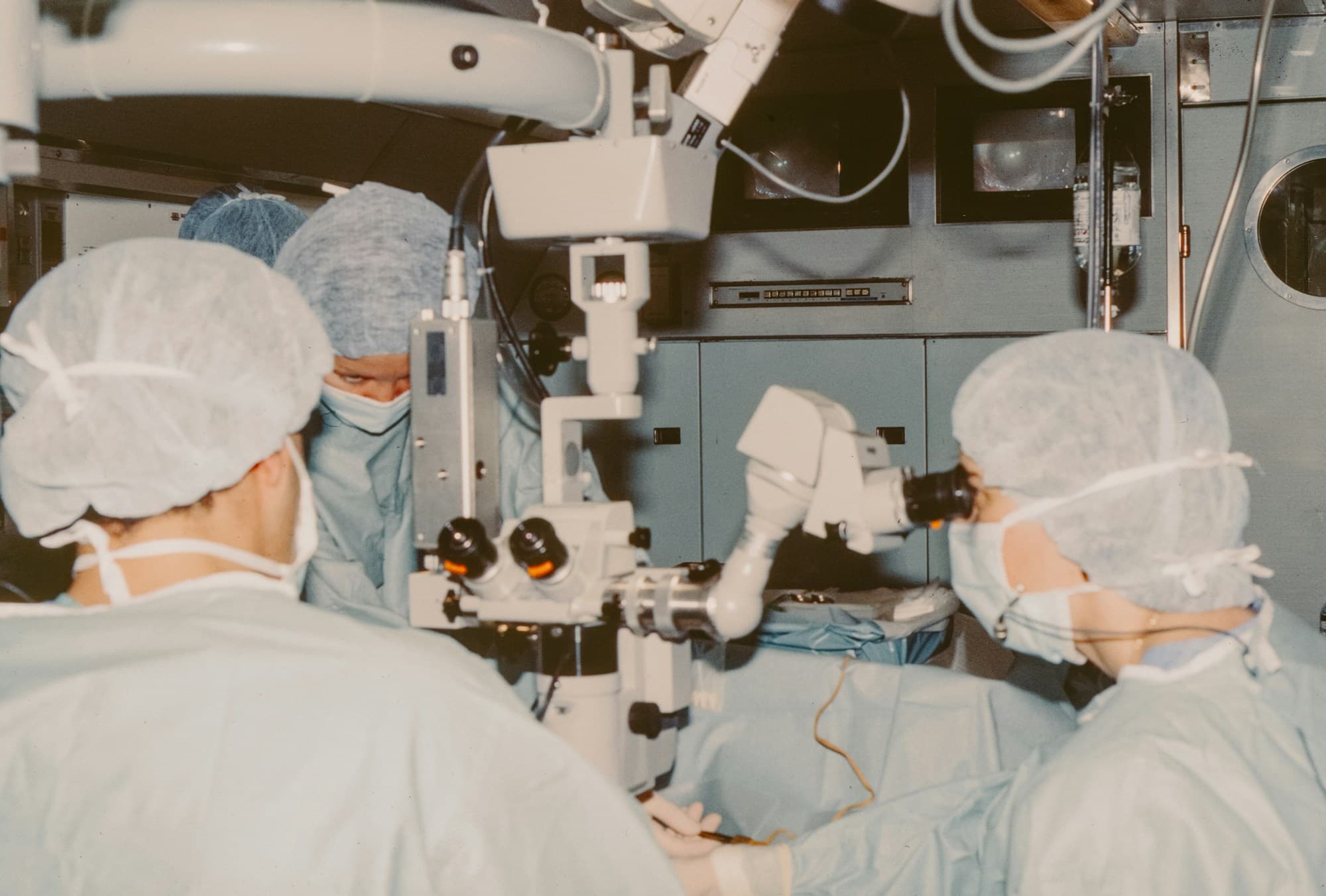
Some structures in the hand are a millimetre or two across. Repairing them requires magnification, instruments designed for the scale, and suture finer than a human hair.
Microsurgery is what makes several things possible: reconnecting a divided artery, repairing a nerve accurately, and moving tissue from elsewhere in the body along with its blood vessels and reconnecting them at the new site.
What the problem looks like
- A divided artery or a devascularised digit
- Nerve injuries requiring accurate repair or grafting
- Defects needing tissue brought from elsewhere in the body
- Reconstruction where local tissue is inadequate or previously used
 Provisional image
Loading anatomy
Principles
How this kind of reconstruction is approached
- 01
Magnification changes what is possible
Under the microscope, the internal structure of a nerve and the layers of a vessel wall are visible, which allows repairs to be aligned accurately rather than approximately.
- 02
Tissue can be moved with its blood supply
Free tissue transfer takes skin, fascia, muscle or bone from another part of the body along with its artery and vein, and reconnects them at the hand.
- 03
Circulation is monitored closely
A microsurgical reconstruction depends on the reconnected vessels staying open. The early post-operative period involves close monitoring for exactly this reason.
- 04
Patient selection matters
Microsurgery is not automatically the best answer. It is chosen when the requirements of the defect genuinely need it.
Clinical detail
Techniques include microvascular anastomosis, vein grafting, epineurial and grouped fascicular nerve repair, nerve grafting and free tissue transfer.
Replantation and revascularisation decisions weigh the level of injury, ischaemia time, mechanism, the digit involved and the functional consequences of the alternative.
Flow-through and chimeric reconstructions are considered where both perfusion and coverage are required in a single stage.
Related conditions
Complex Hand Trauma
Severe injuries that damage more than one tissue system at once - bone, tendon, nerve, blood vessel and skin together.
Peripheral Nerve Injuries
Damage to the nerves that carry signals between the brain and the hand, causing numbness, weakness or pain in the territory that nerve supplies.
Complex Wounds
Wounds of the hand or upper limb that will not heal on their own, or that expose bone, tendon, joint or hardware and need durable coverage.
All reconstruction categories · Revision & secondary surgery
Discuss microsurgical reconstruction
Consultations begin with understanding your symptoms, what you can no longer do comfortably, and what has already been tried.